Coffee Table
European Oak & American Walnut
The Design
Japanese Influence
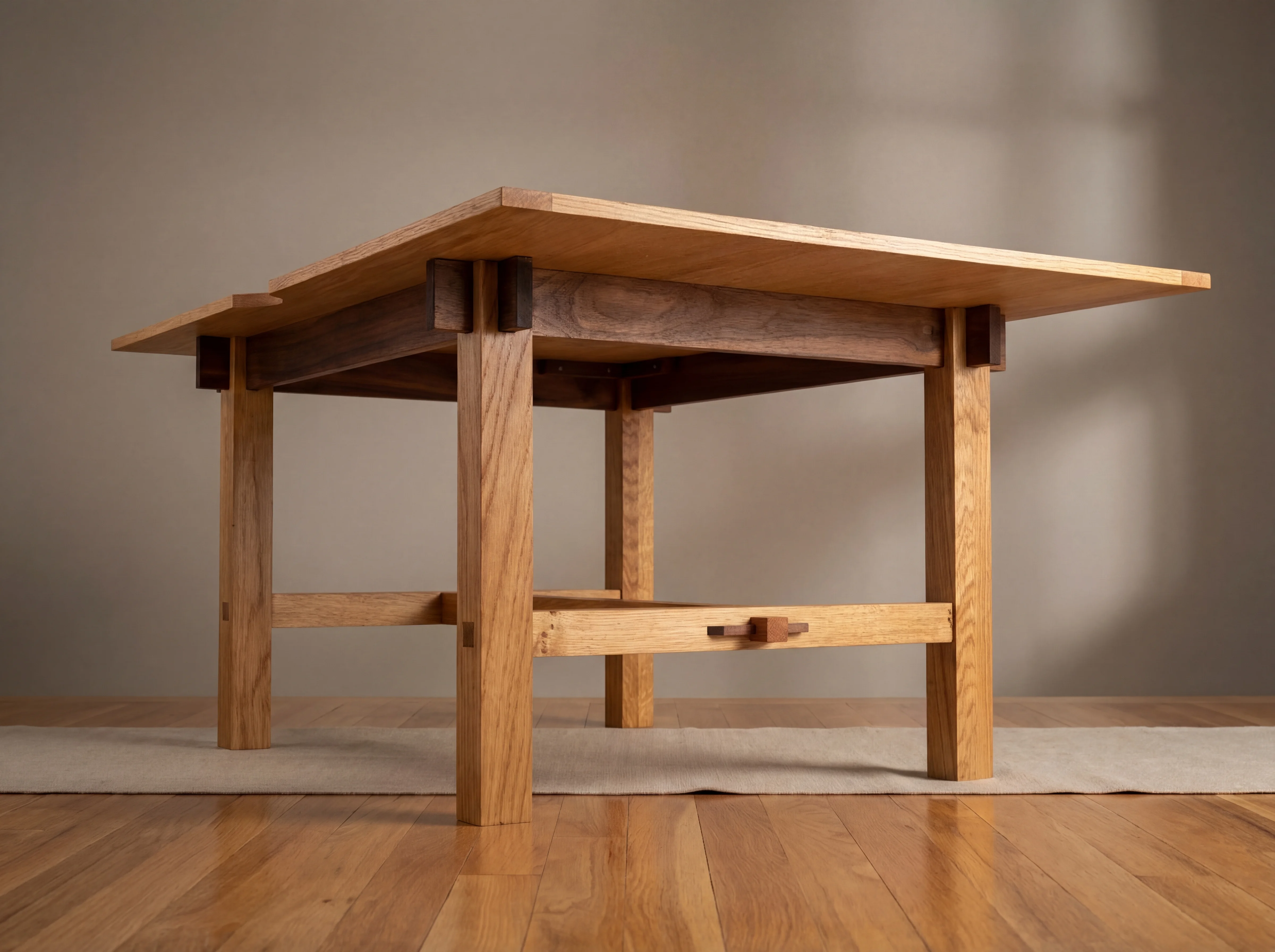
This table draws from the Japanese tradition of exposed joinery, where structure becomes ornament. The floating top, the visible tenons, the deliberate contrast between oak and walnut. Nothing is hidden.
The proportions follow classical rules. The top overhangs generously, creating shadow lines that change through the day. The stretcher sits low, grounding the piece without heaviness.
Influenced by George Nakashima and the mingei tradition: beauty through honest construction.
The Craft
Joinery
The legs use castle joinery at the top where they envelope the walnut aprons that fit together with hidden halving joints. One joint supports the other - a wooden symbiosis that solidifies its structure.
The side rails are through-tenoned into the legs and securely wedged using contrasting keys. The stretcher rail uses a traditional tusk tenon, the walnut wedge driven through a tapered slot. This joint can be disassembled for moving, then reassembled without losing strength.
No metal fasteners. No hidden screws. Just wood holding wood.
Specifications
Primary Wood
European Oak
Secondary Wood
American Walnut
Joinery
Through-tenon, tusk tenon, castle joints, halving joints
Finish
Danish oil, microcrystalline wax
Interested in a bespoke table? Each piece is designed and built to order.
Inquire